
Hyundai Santa Fe (TM): Body Electrical System / Auto Lighting Control System
Description and operation
| Description |
| 1. |
Do not add another device on top of this device.
|
| 2. |
Be sure to switch to manual during poor visibility climate, such as
fog, heavy rain, or cloudy weather.
|
| 3. |
Illumination intensity in an actual vehicle is not always constant,
and lamp ON/OFF time may very depending on the climate, season, and
surrounding environment.
|
| 4. |
Use this system only during sunrise and sunset period, and manually
control lamp ON/OFF for general conditions.
|
| 5. |
Error may occur if light block coating that may change interior illumination
is applied.
|
Components and components location
| Component Location |
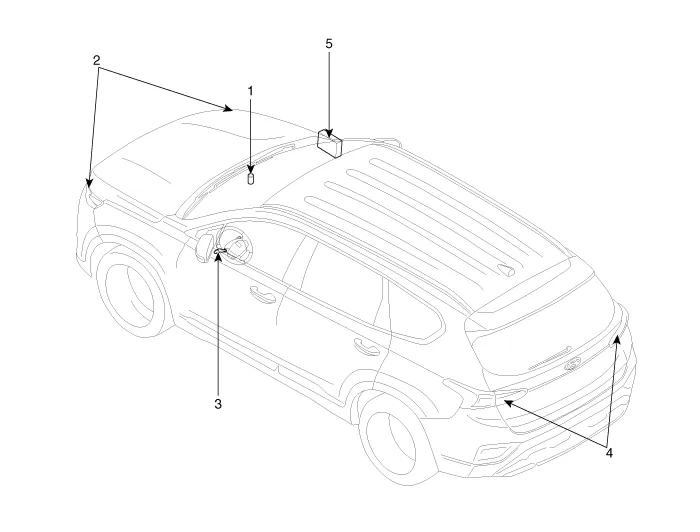
| 1. Auto light
sensor 2. Head lamps 3. Lighting switch (Auto) |
4. Tail lamps 5. IBU (Integrated Body Control Unit) |
Specifications
| Specifications |
|
Items |
Specifications |
|
|
Rated voltage |
5V |
|
|
Load |
Max. 1mA (When head lamp lighting) |
|
|
Illuminations (LUX) |
50 |
1.22 ± 0.27V |
|
150 |
3.23 ± 0.71V |
|
Schematic diagrams
| Circuit Diagram |
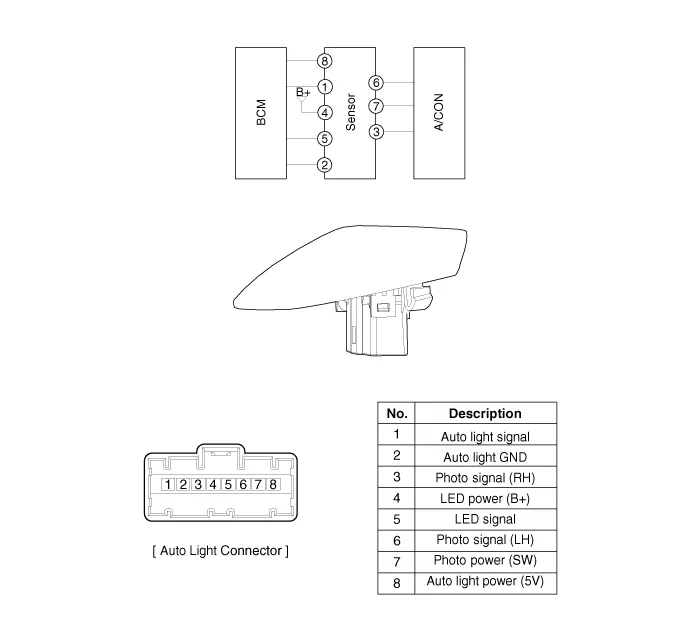
Auto Light Sensor. Repair procedures
| Inspection |
|

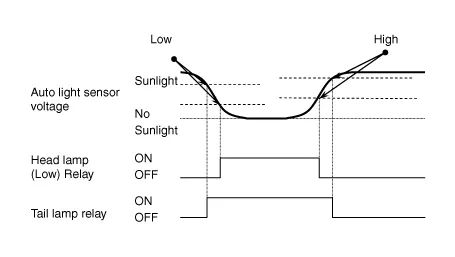
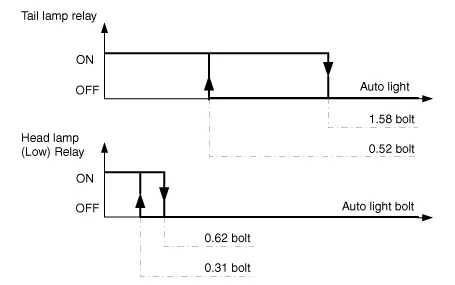
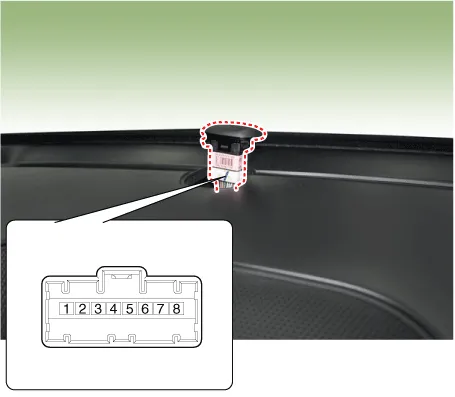
| Removal |
| 1. |
Disconnect the negative (-) battery terminal.
|
| 2. |
Remove the photo & auto light sensor (A) from crash pad upper side by
using a flat-tip screwdriver.
|
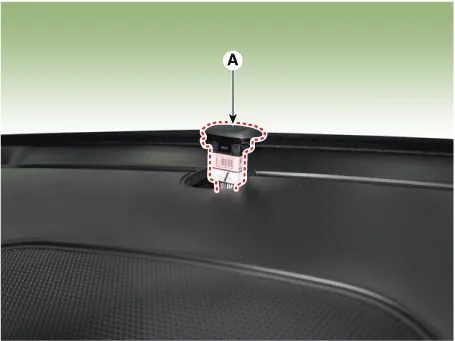
| 3. |
Remove the auto light connector.
|
| Installation |
| 1. |
Reconnect the auto light connector.
|
| 2. |
Install the auto light sensor.
|
Components and components location Component Location 1. Head lamp (Low) 2. Head lamp (High) 3. Daytime running light (DRL)/Positioning lamp 4.
Components and components location Component Location 1. Head lamp leveling actuator Head Lamp Leveling Switch.
Other information:
Hyundai Santa Fe (TM) 2019-2023 Service and Repair Manual: Smart Key Diagnostic. Repair procedures
Inspection Self Diagnosis With Scan Tool It will be able to diagnose defects of SMART KEY system with diagnostic tool quickly. diagnostic tool can operates actuator forcefully, input/output value monitoring and self diagnosis.
Hyundai Santa Fe (TM) 2019-2023 Service and Repair Manual: IMS (Integrated Memory)
Description and operation Description The optimal seat position set by the driver is memorized into the power seat unit by using IMS switch. In case of the position change, the seat can restore its preset position by IMS switch.
Categories
- Manuals Home
- Hyundai Santa Fe Owners Manual
- Hyundai Santa Fe Service Manual
- Lane Following Assist (LFA)
- Parking Brake System. Electronic Parking Brake (EPB)
- Auto Hold. Warning messages
- New on site
- Most important about car
