
Hyundai Santa Fe (TM): Rear Suspension System / Rear Coil Spring. Repair procedures
| Removal |
| 1. |
Loosen the wheel nuts slightly.
Raise the vehicle, and make sure it is securely supported.
|
| 2. |
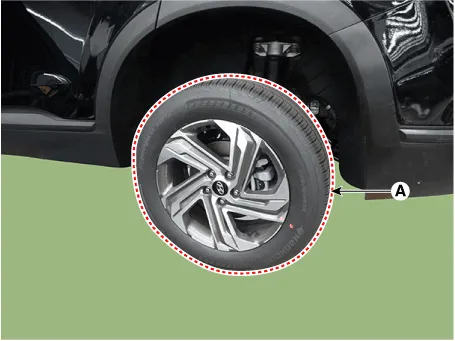
Remove the rear wheel and tire (A) from rear hub.
|

| 3. |
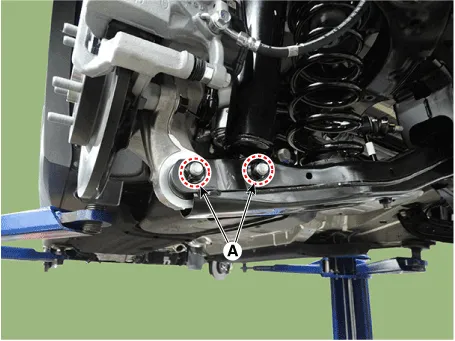
Remove the rear lower arm from the rear axle after loosening the mounting
bolts and nuts (A).
|
| 4. |
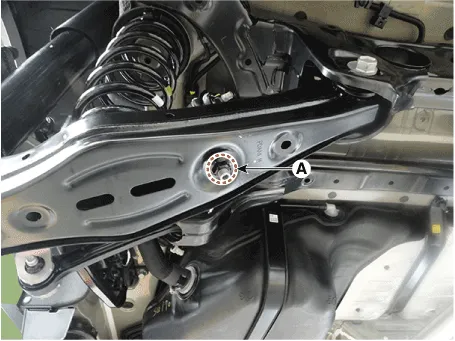
Remove the stabilizer bar link from the rear lower arm after loosening
the mounting nut (A).
|
| 5. |
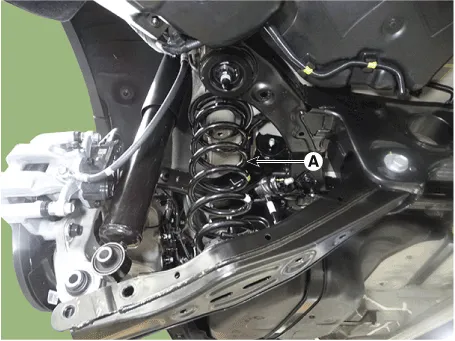
Remove the coil spring (A).
|
| Inspection |
| 1. |
Check the spring for distortion, aging or damage.
|
| 2. |
Check the spring upper pad and lower pad for aging or damage.
|
| Installation |
| 1. |
To install, reverse the removal procedures.
|
| 2. |
Check the alignment.
(Refer to Suspension System - "Alingment")
|
Removal 1. Loosen the wheel nuts slightly. Raise the vehicle, and make sure it is securely supported. 2.
Removal 1. Loosen the wheel nuts slightly. Raise the vehicle, and make sure it is securely supported. 2.
Other information:
Hyundai Santa Fe (TM) 2019-2023 Service and Repair Manual: Rear Blower Motor. Repair procedures
Replacement 1. Disconnect the negative (-) battery terminal. 2. Remove the luggage side trim [RH]. (Refer to Body - "Luggage Side Trim") 3. Separate the blower motor connector (A) and loosen the mounting screws and remove the
Hyundai Santa Fe (TM) 2019-2023 Service and Repair Manual: Description and operation
Description • PDW consists of 8 sensors (front : 4 units, rear : 4 units) that are used to detect obstacles and transmit the result in three separate warning levels, the first, second and third to IBU via LIN communication.
Categories
- Manuals Home
- Hyundai Santa Fe Owners Manual
- Hyundai Santa Fe Service Manual
- Fender Garnish. Repair procedures
- Convenience features
- Four Wheel Drive (4WD) mode selection
- New on site
- Most important about car
