
Hyundai Santa Fe (TM): Vehicle Information, Consumer Information and Reporting Safety Defects
Exterior Overview
Exterior Overview (Front View)

1. Hood
2. Headlight
3. Tires and wheels
4. Side view mirror
5. Sunroof
6. Front windshield wiper blades
7. Windows
8. Front ultrasonic sensors
Exterior Overview (Rear View)
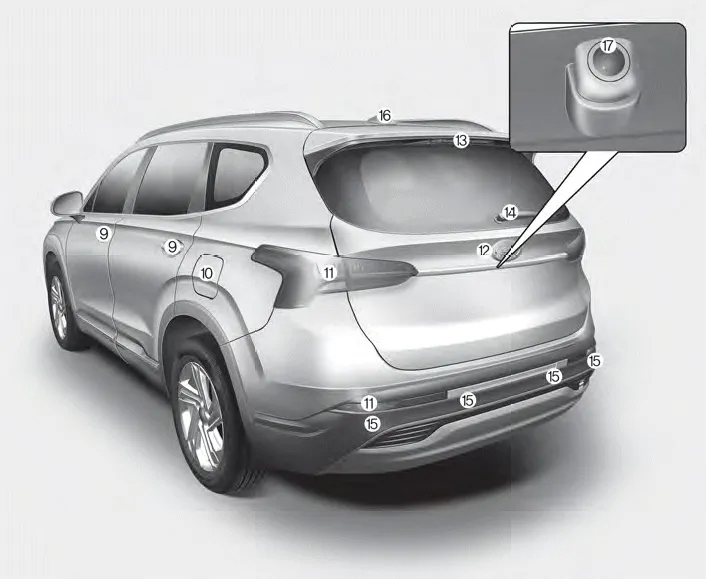
9. Door Handle
10. Fuel filler door
11. Rear combination lamp
12. Liftgate
13. High mounted stop lamp
14. Rear window wiper blades
15. Rear ultrasonic sensors
16. Antenna
17. Rear view camera
Interior Overview
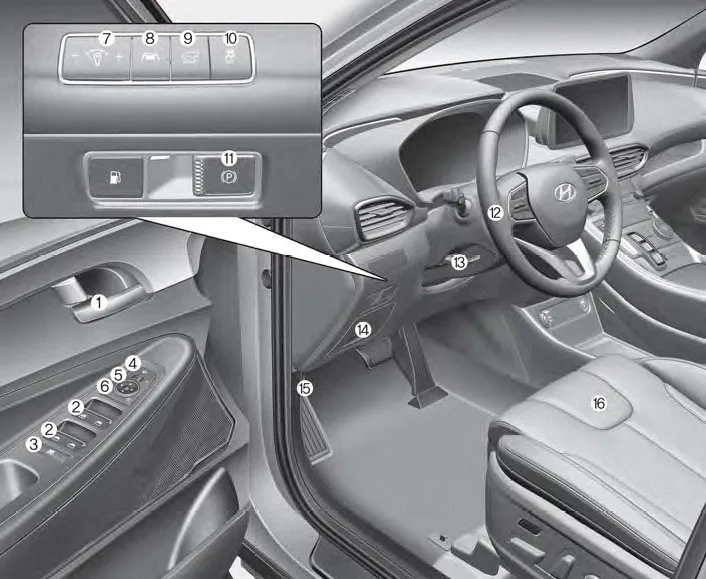
1. Inside door handle
2. Power window switches
3. Power window lock button/Electronic child safety lock button
4. Side view mirror folding button
5. Side view mirror control switch
6. Central door lock switch
7. Instrument panel illumination control switch
8. Lane Safety button
9. Power Liftgate open/close button
10. ESC (Electronic Stability Control) OFF button
11. EPB (Electronic Parking Brake) switch
12. Steering wheel
13. Steering wheel tilt/telescopic switch
14. Fuse box
15. Hood release lever
16. Seat
Instrument panel overview

1. Instrument cluster
2. Driver’s front air bag
3. Engine Start/Stop button
4. Infotainment system
5. Hazard warning lamp switch
6. Climate control system
7. Shift button
8. ISG (Idle Stop and Go) button
9. Auto Hold button
10. Heated steering wheel button
11. Drive mode button
12. DBC (Downhill Brake Control) button
13. Parking Safety button
14. Parking/View button
15. Air ventilation seat button
16. Seat warmer
17. Passenger’s front air bag
18. Glove box
19. Wireless charging system pad
20. Cup holder
21. AC inverter
22. USB charger

1. Lighting control lever
2. Wiper and washer control lever
3. Voice recognition button
4. Bluetooth® hands-free phone button
5. LCD display control
6. Driving Assist button
7. Smart cruise control Vehicle Distance button
Engine Compartment
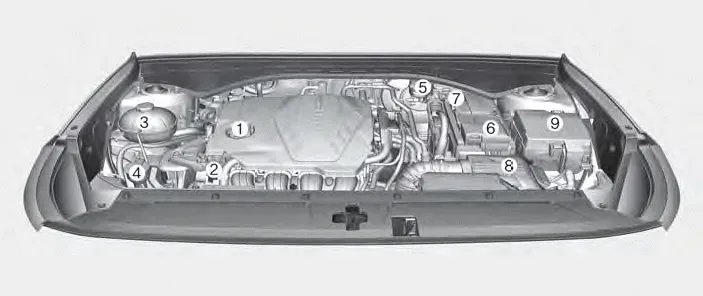
Smartstream G2.5 GDI
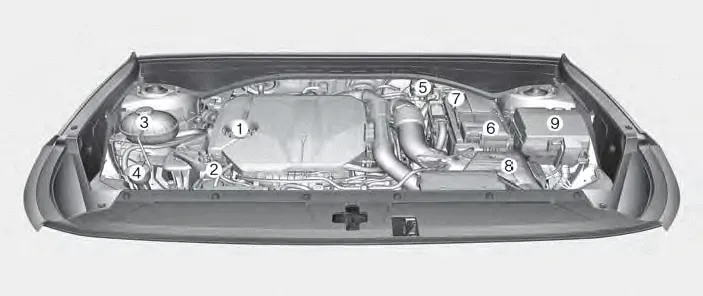
Smartstream G2.5 T-GDI
1. Engine oil filler cap
2. Engine oil dipstick
3. Engine coolant reservoir
4. Windshield washer fluid reservoir
5. Brake fluid reservoir
6. Battery terminal [+]
7. Battery terminal [-]
8. Air cleaner
9. Fuse box
Dimensions. Engine. Bulb wattage
Dimensions

Engine

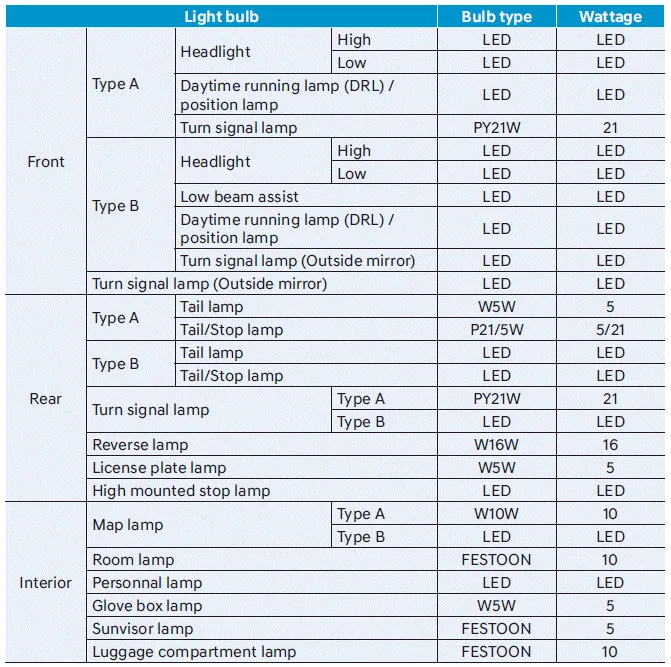
Bulb wattage
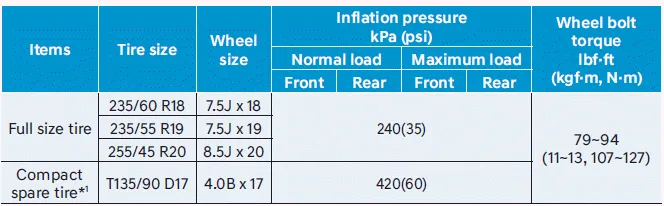
Tires and wheels
NOTICE
- It is permissible to add 3 psi to the standard tire pressure specification if colder temperatures are expected soon. Tires typically lose 1psi (7kPa) for every 12°F temperature drop. If extreme temperature variations are expected, recheck your tire pressure as necessary to keep them properly inflated.
- Tire inflation pressures will vary with changes in elevation. If driving in areas of higher or lower elevation, be sure to check and adjust for proper tire inflation.
CAUTION
- When replacing tires, use the same size originally supplied with the vehicle. Using tires of a different size can damage the related parts or not work properly.
- When replacing tires, ALWAYS use the same size, type, construction and tread pattern supplied with the vehicle for all tires.
Air conditioning system. Volume and weight
Air conditioning system

Contact an authorized HYUNDAI dealer for more details.
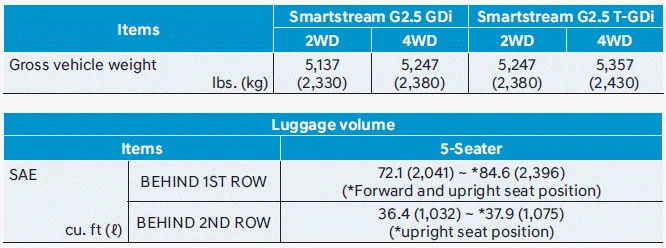
Volume and weight
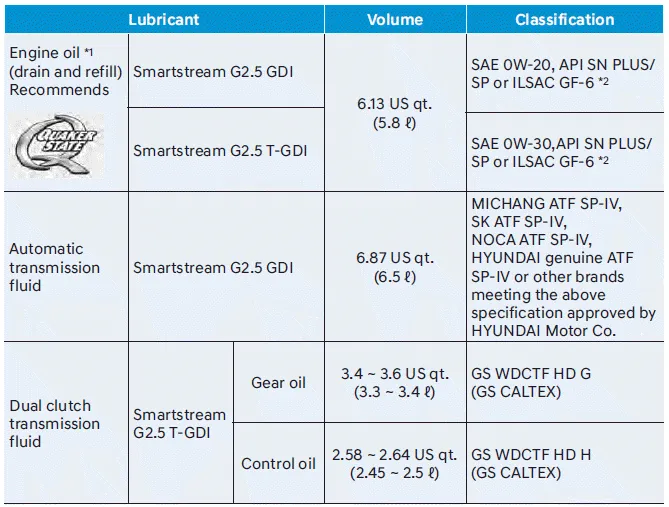
Recommended lubricants and capacities
To help achieve proper engine and powertrain performance and durability, use only lubricants of the proper quality. The correct lubricants also help promote engine efficiency that results in improved fuel economy.
These lubricants and fluids are recommended for use in your vehicle.
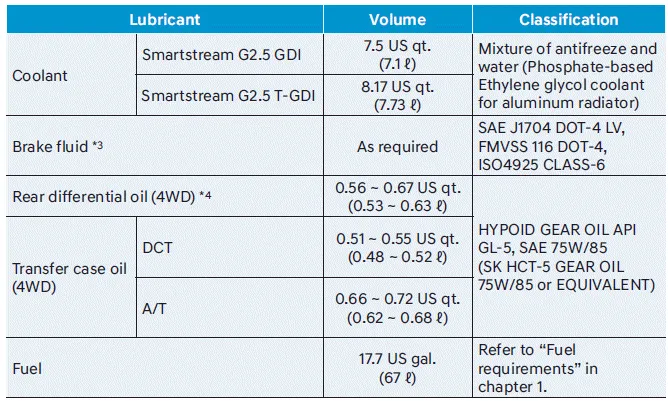
DCT : Dual clutch transmission
A/T : Automatic transmission
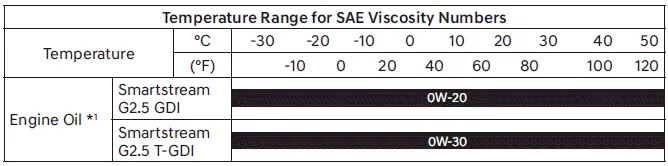
Recommended SAE viscosity number
CAUTION
Always be sure to clean the area around any filler plug, drain plug, or dipstick before checking or draining any lubricant. This is especially important in dusty or sandy areas and when the vehicle is used on unpaved roads. Cleaning the plug and dipstick areas will prevent dirt and grit from entering the engine and other mechanisms that could be damaged.
Engine oil viscosity (thickness) has an effect on fuel economy and cold weather operating (engine start and engine oil flowability). Lower viscosity engine oils can provide better fuel economy and cold weather performance, however, higher viscosity engine oils are required for satisfactory lubrication in hot weather. Using oils of any viscosity other than those recommended could result in engine damage.
When choosing an oil, consider the range of temperature your vehicle will be operated in before the next oil change. Proceed to select the recommended oil viscosity from the chart.
Vehicle Identification Number (VIN). Vehicle certification label. Tire specification and pressure label
Vehicle Identification Number (VIN)

The vehicle identification number (VIN) is the number used in registering your vehicle and in all legal matters pertaining to its ownership, etc.
The number is punched on the floor under the passenger seat. To check the number, open the cover.
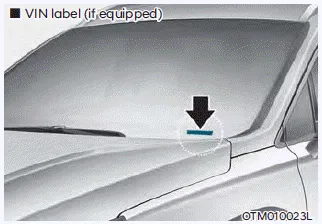
The VIN is also on a plate attached to the top of the left side dashboard. The number on the plate can easily be seen through the windshield from outside.
Vehicle certification label

The vehicle certification label attached on the driver’s (or front passenger’s) side center pillar gives the vehicle identification number (VIN).
Tire specification and pressure label

The tires supplied on your new vehicle are chosen to provide the best performance for normal driving.
The tire label located on the driver’s side center pillar gives the tire pressures recommended for your vehicle.
Engine number. Refrigerant label
Engine number
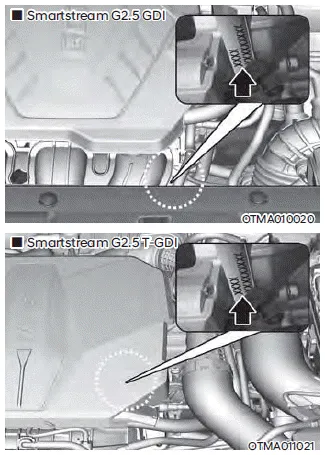
The engine number is stamped on the engine block as shown in the drawing.
Refrigerant label
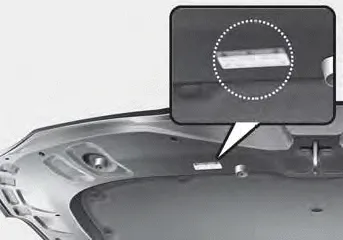
The refrigerant label provides information such as refrigerant type and amount. (R-1234yf)
h1 {color:#FF0000;font-size:26px; font-family: Arial;} h2 {color:#0000FF;font-size:24px; font-family: Arial;} h3 {color:#008000;font-size:22px; font-family: Arial;} h4 {color:#FF00FF;font-size:20px; font-family: Arial;}
Other information:
Hyundai Santa Fe (TM) 2019-2023 Service and Repair Manual: Rear Glass Defogger
Components and components location Component Location 1. Rear glass defogger relay (Buil-in engine room relay box) 2. Rear glass defogger switch (Dual type) 3. Rear glass defogger switch (Manual type) 4.
Hyundai Santa Fe (TM) 2019-2023 Service and Repair Manual: General safety information and caution
Instructions (R-134a) When Handling Refrigerant 1. R-134a liquid refrigerant is highly volatile. A drop on the skin of your hand could result in localized frostbite. When handling the refrigerant, be sure to wear gloves.
Categories
- Manuals Home
- Hyundai Santa Fe Owners Manual
- Hyundai Santa Fe Service Manual
- Lane Following Assist (LFA)
- Power Tailgate Module
- Horn
- New on site
- Most important about car
