
Hyundai Santa Fe (TM): Seats / Head Restraints
The vehicle’s front and rear (second row and/or third row) seats have adjustable head restraints. The head restraints provide comfort for passengers, but more importantly they are designed to help protect passengers from whiplash and other neck and spinal injuries during an accident, especially in a rear impact collision.
WARNING
To reduce the risk of serious injury or death in an accident, take the following precautions when adjusting your head restraints:
- Always properly adjust the head restraints for all passengers BEFORE starting the vehicle.
- NEVER let anyone ride in a seat with the head restraints removed or
reversed.
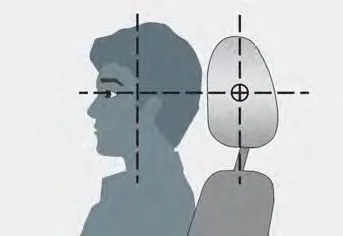
- Adjust the head restraints so the middle of the head restraints is at the same height as the height of the top of the eyes.
- NEVER adjust the head restraints position of the driver’s seat when the vehicle is in motion.
- Adjust the head restraints as close to the passenger’s head as possible. Do not use a seat cushion that holds the body away from the seatback.
- Make sure the head restraints locks into position after adjusting it.
WARNING
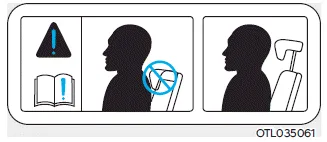
When sitting on the rear seat, do not adjust the height of the head restraints to the lowest position.
CAUTION
When there is no occupant in the rear seats, adjust the height of the head restraints to the lowest position. The rear seat head restraints can reduce the visibility of the rear area.
NOTICE
To prevent damage, NEVER hit or pull on the head restraints.
Front seat head restraints
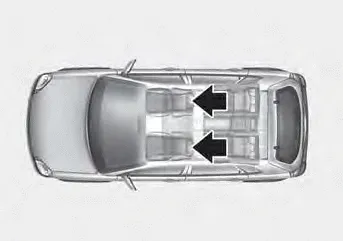
The driver’s and front passenger’s seats are equipped with adjustable head restraint for the passengers safety and comfort.
Adjusting the height up and down

To raise the head restraint:
1. Pull it up to the desired position (1).
To lower the head restraint:
1. Push and hold the release button (2) on the head restraint support.
2. Lower the head restraint to the desired position (3).
NOTICE
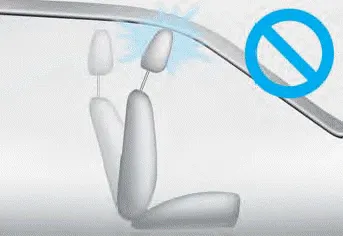
If you recline the seatback towards the front with the head restraint and seat cushion raised, the head restraint may come in contact with the sunvisor or other parts of the vehicle.
Removal/Reinstall
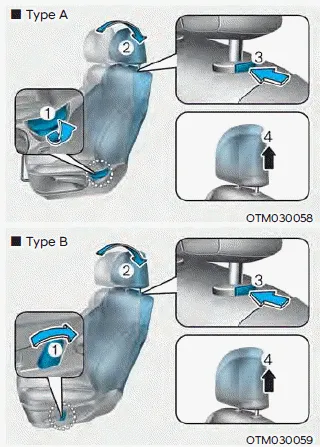
To remove the head restraint:
1. Recline the seatback (2) with the seatback angle lever (1).
2. Raise the head restraint as far as it can go.
3. Press the head restraint release button (3) while pulling the head restraint up (4).
WARNING
NEVER allow anyone to travel in a seat with the head restraint removed.
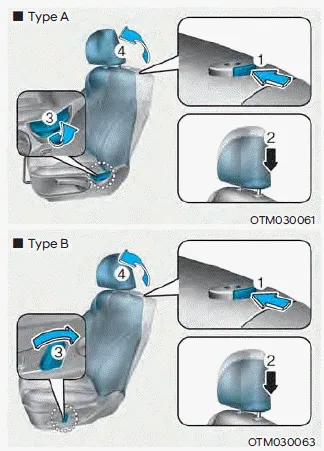
To reinstall the head restraint :
1. Recline the seatback.
2. Put the head restraint poles (2) into the holes while pressing the release button (1).
3. Adjust the head restraint to the appropriate height.
4. Recline the seatback (4) with the seatback angle lever (3).
WARNING
Always make sure the head restraint locks into position after reinstalling and adjusting it properly.
Rear seat head restraint
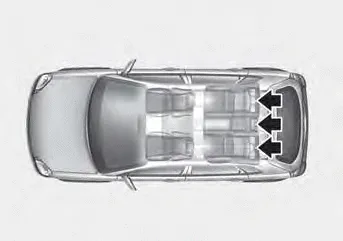
The rear seats are equipped with head restraint in all the seating positions for the passenger’s safety and comfort.
Adjusting the height up and down
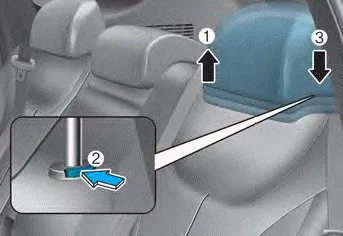
To raise the head restraint:
1. Pull it up to the desired position (1).
To lower the head restraint:
1. Push and hold the release button (2) on the head restraint support.
2. Lower the head restraint to the desired position (3).
Removal/Reinstallation
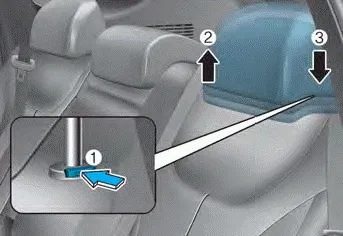
To remove the head restraint:
1. Raise the head restraint as far as it can go.
2. Press the head restraint release button (1) while pulling the headrest up (2).
To reinstall the head restraint:
1. Put the head restraint poles into the holes (3) while pressing the release button (1).
2. Adjust the head restraint to the appropriate height.
Forward and backward (2nd row seat) To move the seat forward or backward: 1. Pull the seat slide adjustment lever up and hold it. 2. Slide the seat to the position you desire.
Seat warmers are provided to warm the seats during cold weather. During mild weather or under conditions where the operation of the seat warmer is not needed, keep the seat warmers OFF.
Categories
- Manuals Home
- Hyundai Santa Fe Owners Manual
- Hyundai Santa Fe Service Manual
- Parking Brake System. Electronic Parking Brake (EPB)
- Power Tailgate Module
- 4 Wheel Drive (4WD) System
- New on site
- Most important about car
